
Resale vs New-Build Homes in Spain: Complete Comparison 2026
Resale vs new-build homes in Spain: ITP vs IVA, warranties, off-plan risk, renovation reality, and total cost comparison before you choose in 2026 Guide.
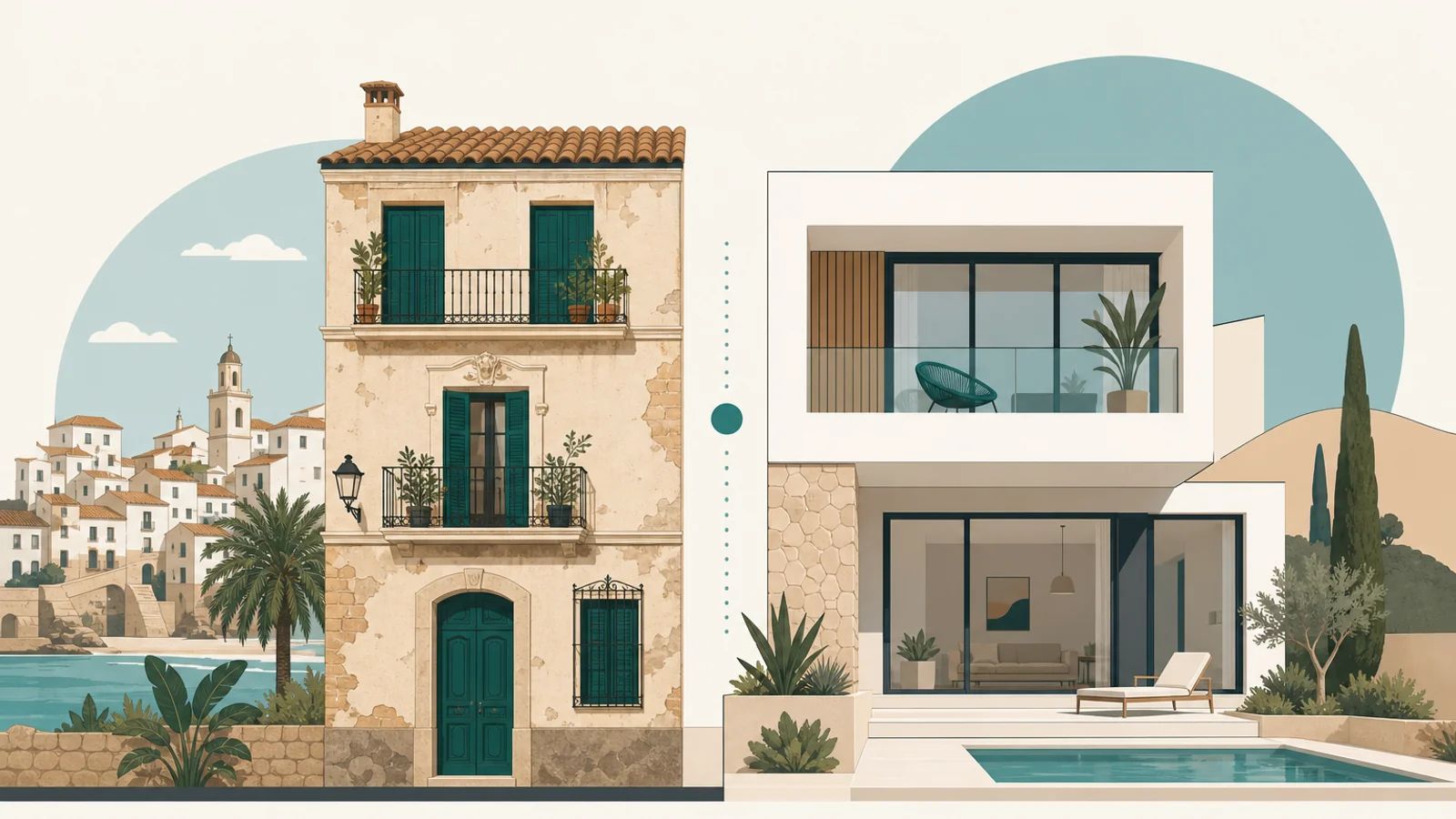
Choosing between a resale (segunda mano) and new-build (obra nueva) property in Spain involves far more than comparing asking prices. Taxation, warranties, renovation budgets, energy efficiency, financing terms, and investment timelines differ dramatically. Resale properties often trade at 10–25% discounts to new-build equivalents but require updates and face higher transfer taxes in some regions. New-builds command premiums but offer modern amenities, builder warranties, and lower VAT rates. This guide dissects the financial, legal, and lifestyle trade-offs to help you choose the best fit for your budget, timeline, and investment goals in 2026.
Key Differences at a Glance
| Factor | Resale (Segunda Mano) | New-Build (Obra Nueva) |
|---|---|---|
| Purchase tax | ITP 6–10% (varies by region) | IVA 10% + AJD 1–1.5% |
| Typical discount | 10–25% below new-build/m² | Premium pricing |
| Condition | Varies; often needs updates | Move-in ready, modern finishes |
| Warranty | None (as-is) | 10-year structural, 3-year systems |
| Energy rating | Often D–G (older stock) | Typically A–B (2019+ regulations) |
| Customization | Limited (existing layout/finishes) | High (pre-construction choices) |
| Financing | Up to 80% LTV (residents) | Up to 80% LTV + stage payments |
| Immediate occupancy | Yes (after closing) | Depends on completion date |
| Community fees | Established (known history) | Often lower initially; may rise |
| Investment timeline | Immediate rental income | Delivery delays possible |
Taxation: ITP vs IVA
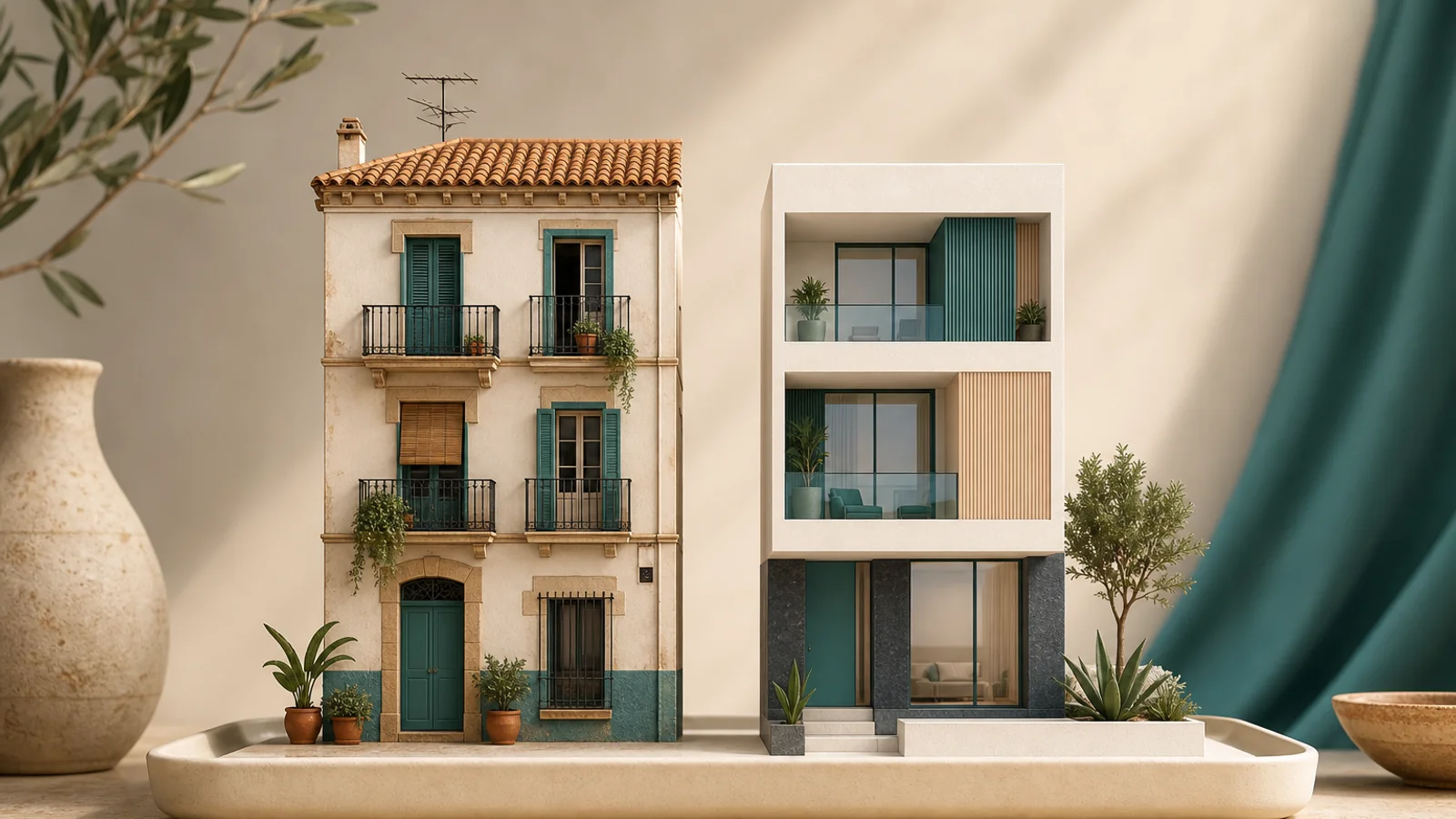
The single biggest cost difference between resale and new-build is taxation.
Resale Properties: ITP (Transfer Tax)
ITP (Impuesto sobre Transmisiones Patrimoniales) applies to all resale transactions. Rates vary by autonomous community and sometimes by property value brackets:
- Madrid: 6% (standard rate).
- Catalonia: 10% (>€1M properties 11%).
- Andalusia: 7% (standard); reduced rates for first-time buyers or low-income.
- Valencia: 10% (standard).
- Balearic Islands: 8–11% (progressive by value).
- Basque Country: 4% (lowest in Spain).
Example (€300,000 resale apartment):
- Madrid ITP: €300,000 × 6% = €18,000.
- Catalonia ITP: €300,000 × 10% = €30,000.
New-Build Properties: IVA + AJD
IVA (Value Added Tax) is 10% on residential new-builds (21% on commercial/luxury properties >€450k in some regions). Additionally, AJD (stamp duty) ranges 1–1.5%.
Example (€300,000 new-build apartment):
- IVA: €300,000 × 10% = €30,000.
- AJD (1.5%): €300,000 × 1.5% = €4,500.
- Total tax: €34,500.
Tax Comparison Summary
For a €300,000 property:
- Madrid resale: €18,000 (ITP 6%).
- Madrid new-build: €34,500 (IVA 10% + AJD 1.5%).
- Savings buying resale in Madrid: €16,500 (5.5% of purchase price).
In low-ITP regions (Basque Country 4%, Madrid 6%), resale offers significant tax savings. In high-ITP regions (Catalonia, Valencia 10%), the gap narrows or disappears. According to Idealista market data, first-time buyers in regions with high ITP often find new-build and resale total costs nearly equal after factoring in renovation budgets. For comprehensive tax planning guidance, see the Notariado (Spanish Notary Council) resources on property transfer taxes.
Strategic insight: in Catalonia/Valencia, new-build and resale taxes are similar (both ~10–11.5%); choice hinges on property condition and features, not tax.
Cost breakdown
| Cost bucket | Typical share / note |
|---|---|
| Primary price / works | Largest line item |
| Taxes & fees | Often mid-single to low-double digits % |
| Professionals | Lawyer, notary, agent, surveyor |
| Contingency | Keep a cash buffer |
Purchase Price & Value
Resale: Lower Entry, Higher Variability
Resale properties typically trade 10–25% below new-build equivalents per square meter, especially in mature neighborhoods with older stock. Factors driving discounts:
- Age (30–50+ year buildings).
- Outdated kitchens, bathrooms, flooring.
- Lower energy certificates (D–G ratings = higher utility bills).
- No elevator (many older 4–5 story buildings).
- Smaller layouts (1960s–1980s builds often lack open plans).
Advantages:
- Negotiation leverage: motivated sellers (inheritances, relocations, financial pressure) may accept 10–20% below asking.
- Established neighborhoods: central locations, mature infrastructure, schools, transport.
- Immediate possession: no construction delays.
Risks:
- Hidden costs: plumbing, electrical, roof repairs can run €20,000–50,000.
- Community debts (derramas): unresolved building issues (facade, elevator) may require special assessments.
- Outdated layouts: non-open-plan, small kitchens, single bathrooms.
New-Build: Premium Pricing, Modern Standards
New-builds command premiums (10–30% higher/m²) but deliver:
- Modern finishes: contemporary kitchens, bathrooms, flooring, windows.
- Energy efficiency: A–B ratings; insulation, double glazing, efficient HVAC = lower bills (€50–100/month savings).
- Builder warranty: 10 years structural, 3 years systems (plumbing, electric), 1 year finishes.
- Customization: choose tiles, cabinets, colors pre-construction.
- Parking & storage: most new developments include underground parking, storage rooms.
- Amenities: pools, gyms, green spaces (in larger complexes).
Disadvantages:
- Higher upfront cost: €300,000 resale may equal €350,000–380,000 new-build for similar size/location.
- Delivery risk: delays (6–12 months common), developer solvency issues.
- Unproven community: fees may rise once builder transfers control to residents.
Quick comparison
| Topic | Resale (segunda mano) | New build (obra nueva) |
|---|---|---|
| Main tax | ITP (regional, often ~6–10%) | IVA 10% + AJD |
| Warranty | Limited / as-is | Builder warranty years |
| Negotiation | Usually more room | Often list-price focused |
| Move-in timing | Faster if vacant | May wait on delivery |
Renovation & Condition
Resale: Budget for Updates
Most resale properties require some level of renovation to meet modern standards and buyer preferences. Typical budgets:
- Cosmetic refresh (paint, flooring, light fixtures): €5,000–15,000.
- Kitchen & bathroom remodel: €12,000–30,000.
- Full renovation (layout changes, electric, plumbing, finishes): €30,000–60,000 (€400–800/m²).
- Energy upgrades (windows, insulation, boiler): €8,000–20,000; may qualify for Next Generation EU subsidies.
ROI on renovations:
- Mid-range kitchen/bath updates: 60–80% cost recovery on resale.
- Energy upgrades: lower bills, improved CEE rating (attracts tenants/buyers), up to 20% valuation lift in premium markets.
- Full renovations: 50–70% recovery unless targeting luxury buyers.
Renovation financing: Spanish banks offer home improvement loans (€10,000–100,000, 5–15 years, 4–7% interest). Some lenders combine purchase + renovation into single mortgage.
New-Build: Move-In Ready
New-builds require zero immediate investment. Buyers receive:
- Turnkey apartments ready for furnishing.
- 10-year structural warranty (foundation, walls, roof).
- 3-year systems warranty (electric, plumbing, HVAC).
- 1-year finishes warranty (paint, tiles, cabinets).
Defects: developers must fix defects (vicios ocultos) within warranty periods. Major structural issues (cracks, leaks, foundation settlement) covered 10 years; notify builder and escalate to arbitration or court if unresponsive.
Community setup: in new developments, initial community fees set by developer often rise 10–30% once resident committee takes over and budgets for reserves, insurance, maintenance.
Energy Efficiency & Running Costs
Energy Performance Certificates (CEE)
All properties for sale/rent must display CEE (Certificado de Eficiencia Energética), rating A (best) to G (worst).
Resale stock:
- Pre-2000 buildings: typically D–G ratings.
- Single-pane windows, poor insulation, old boilers.
- Utility bills: €120–200/month (heating, cooling, electric).
New-builds:
- 2006+ regulations: minimum E rating.
- 2019+ regulations: A–B ratings mandatory.
- Double/triple glazing, insulation, efficient HVAC, LED lighting.
- Utility bills: €60–100/month (40–50% savings).
Investment impact: A-rated properties command 5–15% rent premiums and 10–20% valuation premiums vs. equivalent D-rated stock. Tenants increasingly prioritize low utility costs.
Upgrade programs: Spain’s Next Generation EU funds subsidize energy renovations (windows, insulation, solar panels). Grants cover 30–50% of costs; check www.idae.es and regional housing authorities.
Process flow
flowchart LR
%% Process
S0["1. Taxes"]
S1["2. Warranty"]
S2["3. Timing"]
S3["4. Cost"]
S4["5. Decide"]
S0 --> S1
S1 --> S2
S2 --> S3
S3 --> S4
Financing & Payment Terms
Resale Financing
- Mortgage LTV: up to 80% for Spanish tax residents, 60–70% for non-residents.
- Deposit: 20–40% of purchase price due at notary signing.
- Appraisal: bank orders independent valuation; loan capped at 80% of lower of appraisal or purchase price.
- Closing: single payment at notary (escritura pública).
New-Build Financing
Stage payments common:
- Reservation deposit: 3,000–10,000 at contract signing.
- Initial payment: 20–40% within 30–60 days.
- Progress payments: 20–30% at foundation, structure, finishing stages.
- Final payment: balance + mortgage at completion/notary deed.
Bank guarantees: developers must provide bank guarantee (aval bancario) for all payments until property delivered; protects buyers if developer defaults.
Mortgage activation: mortgage funds release only at final deed signing (completion). Buyers must cover stage payments from own funds or bridge financing; some banks offer construction loans synced to stage payments.
Non-resident challenges: non-residents find stage-payment financing harder; many pay stages in cash, take mortgage at completion.
Legal & Due Diligence
Resale: Comprehensive Checks Required
- Nota simple (land registry extract): confirm ownership, liens, mortgages, easements.
- IBI receipts: verify property tax payments up-to-date; seller owes prorated share.
- Community fees: request last 2 years of statements; check for arrears or pending special assessments (derramas).
- Building inspection: hire independent surveyor (€300–800) to assess structure, systems, defects.
- Habitation certificate (cédula de habitabilidad): required in Catalonia, Valencia, Balearics; confirms property meets habitability standards.
- Energy certificate (CEE): seller must provide; verify rating and recommendations.
- Occupancy status: confirm property vacant or tenant-occupied; check LAU lease terms if tenant in place.
- Illegal constructions: verify no unlicensed additions (terraces, extensions) that could trigger fines or demolition orders.
New-Build: Simpler but Not Risk-Free
- Developer solvency: research builder track record, prior projects, financial health; request bank guarantee documentation.
- Building permits: verify licencia de obra (construction permit) granted by municipality.
- Contract review: lawyer should review purchase contract (contrato de compraventa) for clauses on delays, penalties, quality standards.
- Completion certificate (certificado final de obra): developer must obtain from municipality before final deed; confirms property built to approved plans.
- First occupancy license (licencia de primera ocupación): required for legal occupancy; some regions issue this, others rely on completion certificate.
- Community statutes: review proposed community rules, fee budgets, management structure.
Delivery delays: include contract clauses specifying completion date and penalties for delays (e.g., €X/day after target date, or right to cancel with refund + interest).
Practical checklist
- Verify key documents with a professional
- Compare at least two solid options
- Budget taxes, fees, and a contingency
- Confirm local rules for your city/CCAA
- Plan the next step before you commit
Investment & Rental Considerations
Resale for Cash Flow
Advantages:
- Immediate rental income: close and list within days.
- Established neighborhoods: proven rental demand, mature transport, schools.
- Higher yields (if priced right): 5–7% gross in secondary cities, 4–5% in Madrid/Barcelona.
- Value-add potential: renovate to achieve 15–25% valuation lift and higher rents.
Challenges:
- Vacancy during renovation: 2–6 months if major updates needed.
- Tenant expectations: modern tenants expect updated kitchens, bathrooms, energy efficiency.
- Maintenance: older buildings = more frequent repairs (boilers, plumbing, electrical).
New-Build for Appreciation
Advantages:
- Capital growth: new-builds in growth corridors (Valencia, Málaga, emerging suburbs) appreciate 5–8% annually.
- Lower maintenance: first 5–10 years typically trouble-free; warranty covers defects.
- Premium tenants: new-builds attract higher-income tenants willing to pay 10–20% rent premiums.
- Tax benefits: some regions offer IBI reductions for energy-efficient new-builds; depreciation schedules favor newer properties.
Challenges:
- Delivery delays: 6–12 months common; rental income postponed.
- Lower initial yield: higher purchase price = 4–5.5% gross yields (vs. 5.5–7% resale).
- Market risk: if area oversupplied, new-builds may struggle to command premium rents.
Decision Framework
Choose Resale If:
- Budget-conscious: maximizing value, willing to manage renovations.
- Prime location priority: central neighborhoods where new-build supply is scarce.
- Immediate occupancy: need to move in or start renting ASAP.
- Negotiation skills: confident negotiating below asking price, identifying value-add opportunities.
- DIY or contractor network: capable of overseeing renovations or have trusted partners.
- Tax advantage: in low-ITP regions (Madrid 6%, Basque 4%), resale saves significant tax.
Choose New-Build If:
- Turnkey preference: want modern, ready-to-use property with zero immediate work.
- Warranty security: value 10-year structural guarantees and defect protections.
- Energy efficiency: prioritize low bills, high CEE rating, modern HVAC.
- Customization: want to choose finishes, layouts (if buying off-plan).
- Long-term hold: capital appreciation focus; willing to wait 6–12 months for completion.
- Premium rental market: targeting high-income tenants who pay premiums for new, amenity-rich properties.
- Financing flexibility: comfortable with stage payments or have liquid capital.
Hybrid Strategy: Buy Resale, Renovate to New-Build Standard
Some investors buy resale at discount, invest €30,000–60,000 in full renovation (kitchen, bath, energy upgrades, modern finishes), and achieve:
- Total cost 10–20% below equivalent new-build.
- Rental income matching or exceeding new-build rates.
- Appreciation from forced equity (renovation value-add).
Example:
- Resale purchase: €250,000 (€2,500/m², 100m²).
- Renovation: €40,000 (€400/m²).
- Total cost: €290,000 + tax (ITP 6% Madrid = €15,000) = €305,000.
- Comparable new-build: €350,000 + tax (IVA 10% + AJD = €38,500) = €388,500.
- Savings: €83,500 (21.5%).
Practical Tips
- Visit multiple properties: compare 3–5 resale + 3–5 new-build in target neighborhoods.
- Calculate total cost: purchase + tax + renovation (resale) vs. purchase + tax + furniture (new-build).
- Model cash flow: net rental income = gross rent - (IBI + community + insurance + maintenance + vacancy @ 5–10% + management 8–12%).
- Check developer track record: for new-builds, research prior projects, delivery timelines, quality reviews.
- Hire independent professionals: lawyer, surveyor, architect (if renovating), property manager.
- Negotiate: resale sellers often accept 5–15% below asking; new-build developers less flexible but may offer upgrades or furniture packages.
- Factor holding costs: if new-build delayed 12 months, calculate lost rental income vs. price appreciation.
- Energy-efficiency incentives: apply for Next Generation EU grants if renovating resale to A/B rating.
Finding Real Estate Expertise
Inmodir.com connects buyers with experienced agencies specializing in resale and new-build properties across Spain:
- Real estate agencies in Madrid
- Real estate agencies in Barcelona
- Real estate agencies in Valencia
- Real estate agencies in Málaga
- Real estate agencies in Sevilla
Browse agents by city, read client reviews, and find professionals who can guide you through due diligence, negotiations, and renovation planning for resale properties or coordinate with developers for new-build purchases. Many offer bilingual services and investment advisory for foreign buyers.
Choosing between resale and new-build in Spain requires balancing upfront costs, taxes, renovation budgets, energy efficiency, and investment timelines. Resale properties deliver lower entry prices and established locations but demand updates and vary widely in condition. New-builds offer modern amenities, warranties, and energy savings at premium prices and with delivery risks. By understanding the financial trade-offs, legal requirements, and market dynamics, you can select the property type that aligns with your budget, lifestyle, and investment goals in Spain’s diverse real estate market for 2026.
Related guides and city hubs
Useful next reads on Inmodir:
- first time home buyer guide spain
- home renovation cost roi spain
- energy performance certificate spain
- mortgages home financing spain
City hubs:
Official and industry sources
Verify figures and rules on primary sources:
This guide is educational, not legal, tax, or mortgage advice. Confirm details with a qualified professional and current CCAA rules.
FAQ
Do rules vary by region? Yes—ITP, some rental rules, and grants differ by autonomous community. Always verify locally.
Should I use a lawyer? For purchases, auctions, and complex leases, independent legal advice is strongly recommended.
Are market figures guaranteed? No. Official indexes and portal reports describe past or recent conditions, not future returns.
What should I budget beyond the price? Plan for taxes, notary/registry, possible agency fees, and a cash buffer after closing.
Where can I dig deeper on Inmodir? Use the related guides and city hubs linked in this article.