
Energy Performance Certificate Spain: Complete CEE Guide (A-G Ratings)
Energy performance certificate (CEE) in Spain: when it is mandatory to sell or rent, validity, cost, letter ratings, and how it affects mortgages and grants.
If you’re buying, selling, or renting property in Spain, you’ll encounter the Certificado de Eficiencia Energética (CEE)—Spain’s mandatory energy performance certificate. This document rates a building’s energy consumption and CO₂ emissions on a scale from A (most efficient) to G (least efficient), helping buyers and tenants make informed decisions about running costs and environmental impact.
The energy performance certificate Spain requires became obligatory in 2013, transposing EU directives into Spanish law. According to IDAE (Instituto para la Diversificación y Ahorro de la Energía), over 4 million Spanish properties now have registered CEE certificates, with demand continuing to grow as sustainability becomes central to property valuations.
In this comprehensive guide, we’ll explain what the CEE is, why it matters, how to obtain it, what factors influence your rating, how to improve your property’s efficiency, and the legal consequences of non-compliance. Whether you’re a homeowner preparing to sell, a landlord listing a rental, or a prospective buyer evaluating properties, this guide will equip you with everything you need to navigate Spain’s energy certification system.
What Is the Energy Performance Certificate (CEE)?
The Certificado de Eficiencia Energética is an official document that assesses a property’s energy efficiency. Introduced in Spain in 2013 (transposing the EU’s Energy Performance of Buildings Directive), the CEE provides two key ratings:
- Energy Consumption: How much primary energy (kWh/m²·year) the property uses for heating, cooling, hot water, and lighting.
- CO₂ Emissions: The property’s annual greenhouse gas emissions (kg CO₂/m²·year).
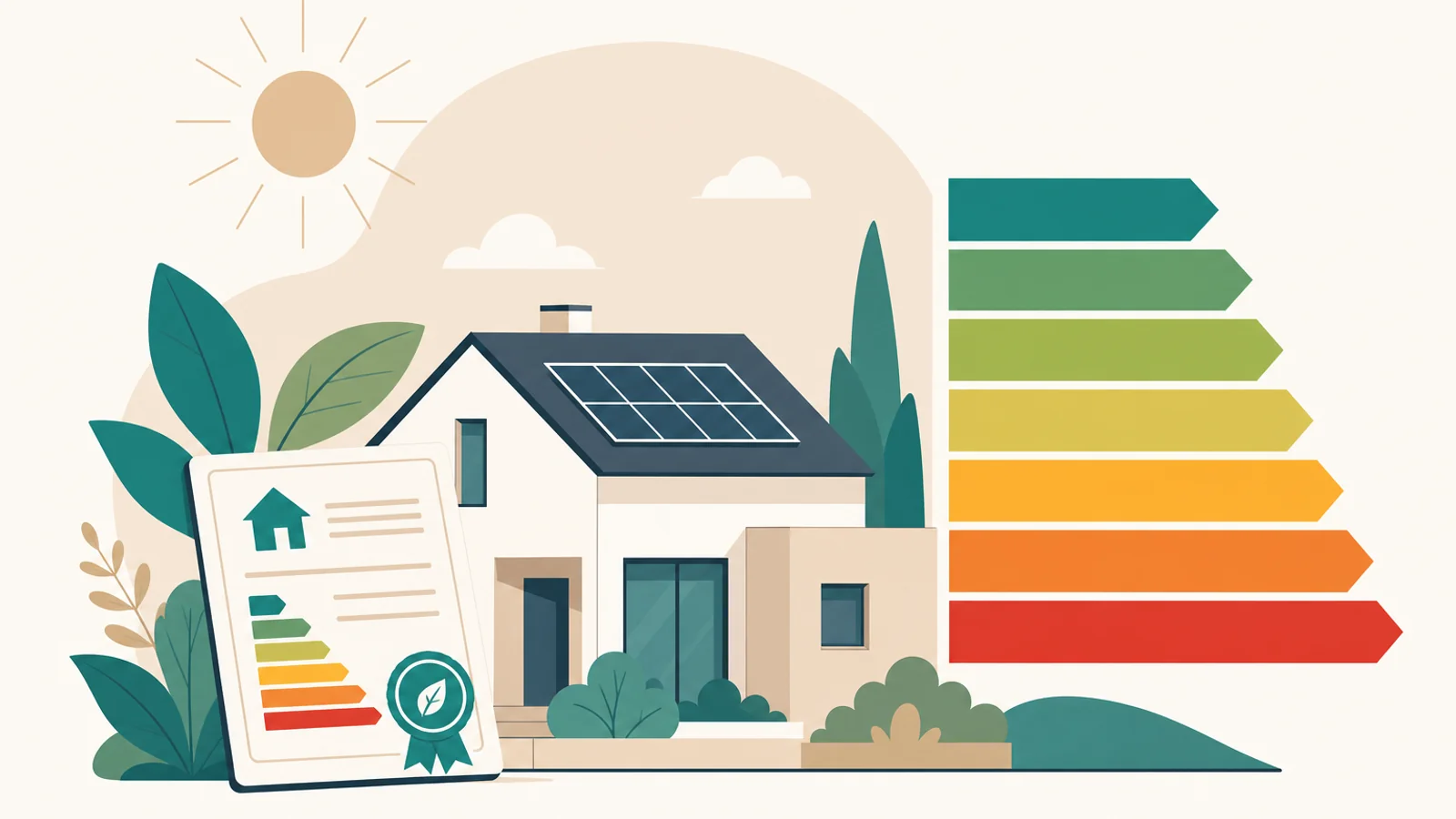
Both metrics are graded from A (best) to G (worst), with the certificate displaying two color-coded scales. A property with an A rating consumes minimal energy and produces low emissions, while a G rating indicates high consumption and significant environmental impact.
Why Does It Matter?
- Legal Requirement: Since June 2013, sellers and landlords must provide a valid CEE when advertising, selling, or renting a property. Failure to comply can result in fines ranging from €300 to €6,000 (depending on the region and severity).
- Transparency: Buyers and tenants can compare energy costs across properties, potentially saving thousands of euros annually on utility bills.
- Property Value: Higher ratings (A, B, C) increasingly command price premiums, especially as energy costs rise and sustainability becomes a priority for buyers.
- Access to Green Financing: Many banks offer better mortgage terms (lower interest rates, higher loan-to-value ratios) for energy-efficient properties rated C or above.
Process flow
flowchart TD
%% EN: Energy Certificate Process
S0["Start: Property Needs CEE"]
S1{"Already have<br/>valid certificate?"}
S2["Hire certified<br/>technician"]
S3["On-site inspection<br/>& assessment"]
S4["Receive rating<br/>(A-G scale)"]
S5{"Rating below<br/>D or E?"}
S6["Consider energy<br/>improvements"]
S7["Register certificate<br/>with region"]
S8["List property<br/>with rating"]

S0 --> S1
S1 -->|No or expired| S2
S1 -->|Yes & valid| S8
S2 --> S3
S3 --> S4
S4 --> S5
S5 -->|Yes - Poor rating| S6
S5 -->|No - Good rating| S7
S6 --> S7
S7 --> S8
Who Needs a CEE?
The CEE is mandatory for:
- Sellers: Any residential, commercial, or mixed-use property being sold (new builds and resales).
- Landlords: Properties offered for long-term or short-term rental (including vacation rentals listed on Airbnb, Booking.com, etc.).
- New Construction: Developers must obtain a CEE before issuing the final occupancy license (licencia de primera ocupación).
Exemptions
A small number of properties are exempt:
- Buildings officially protected for historical or architectural reasons (subject to heritage restrictions that prevent energy improvements).
- Properties with a usable floor area under 50 m² (in some regions, though this is rare).
- Buildings used for worship or religious activities.
- Industrial sites, workshops, and non-residential agricultural buildings (unless they have residential components).
- Properties to be demolished or undergoing major renovation (though a new CEE is required once works are complete).
- Buildings occupied less than four months a year and with expected energy use under 25% of year-round consumption (e.g., remote hunting lodges).
For standard apartments, houses, and commercial premises, the certificate is non-negotiable.
How the CEE Rating System Works
The CEE uses a letter scale (A–G) and a color code (dark green to red) to represent efficiency:
- A (Dark Green): Exceptional efficiency; annual consumption typically under 40 kWh/m²·year. Common in passive houses or newly built homes with solar panels, high-performance insulation, and heat pumps.
- B (Light Green): Very efficient; 40–70 kWh/m²·year. Modern buildings with good insulation, double glazing, and efficient heating systems.
- C (Yellow-Green): Efficient; 70–120 kWh/m²·year. Well-maintained properties with some energy-saving features (thermal windows, condensing boilers).
- D (Yellow): Average; 120–160 kWh/m²·year. Typical for mid-2000s construction with standard insulation and conventional heating.
- E (Orange): Below average; 160–240 kWh/m²·year. Older properties (1980s–2000s) with single-pane windows, minimal insulation, and outdated boilers.
- F (Light Red): Poor; 240–320 kWh/m²·year. Pre-1980s buildings with no insulation, drafty windows, and inefficient electric heaters.
- G (Dark Red): Very poor; over 320 kWh/m²·year. Ancient structures with no energy improvements, often heated by coal or old electric radiators.
CEE Rating Impact on Property Value
| Rating | Energy Use (kWh/m²/year) | Typical Annual Savings vs. G | Market Premium |
|---|---|---|---|
| A | under 40 | €1,200–€1,800 | +8% to +12% |
| B | 40–70 | €900–€1,400 | +5% to +8% |
| C | 70–120 | €600–€1,000 | +2% to +5% |
| D | 120–160 | €300–€600 | Baseline |
| E | 160–240 | Reference point | -3% to -5% |
| F | 240–320 | -€400 to -€700 | -5% to -8% |
| G | >320 | Highest bills | -8% to -12% |
What Gets Assessed?
A certified technician evaluates:
- Building Envelope: Wall thickness, insulation type and quality, roof insulation, window glazing (single, double, triple), door seals, thermal bridges.
- Heating and Cooling Systems: Type (gas boiler, heat pump, air conditioning, underfloor heating), age, efficiency rating, maintenance records.
- Hot Water: Boiler or water heater efficiency, presence of solar thermal panels or heat pump water heaters.
- Lighting: Type of bulbs (LED, halogen, incandescent), natural light availability (relevant mainly for commercial properties).
- Renewable Energy: Solar photovoltaic panels, solar thermal collectors, biomass boilers, geothermal systems.
- Ventilation: Natural vs. mechanical ventilation, heat recovery systems.
- Climate Zone: Spain is divided into climate zones (from the mild Canary Islands to the continental interior), which affect baseline energy needs.
The technician uses official software (CE3X, CEXv2, or CERMA, depending on the region) to calculate the rating based on these factors and the property’s location.
How to Obtain Your Energy Performance Certificate
Step 1: Hire a Qualified Technician
Only accredited professionals can issue CEEs in Spain. Eligible certifiers include:
- Architects (arquitectos)
- Technical Architects / Building Engineers (arquitectos técnicos or aparejadores)
- Industrial Engineers (ingenieros industriales)
- Technical Industrial Engineers (ingenieros técnicos industriales)
To find a certifier:
- Search regional professional association directories (Colegio Oficial de Arquitectos, Colegio de Aparejadores).
- Use comparison platforms like Certificadodeeficienciaenergetica.com or Certicalia.
- Ask your real estate agent or lawyer for referrals.
Expect to pay €100–€250 for a typical apartment (60–100 m²), €200–€400 for a detached house (100–200 m²), and more for larger or complex properties. Prices vary by region, property size, and technician experience.
Step 2: On-Site Inspection
The technician will visit the property (allow 1–2 hours) to:
- Measure rooms and building dimensions.
- Photograph and note construction details (wall materials, window types, insulation).
- Inspect heating and cooling equipment (boiler model, AC units).
- Review utility bills to estimate consumption patterns (optional but helpful).
- Check for renewable energy installations (solar panels, biomass stoves).
You should provide:
- Property deeds or floor plans (escritura).
- Invoices for recent improvements (new windows, boiler replacement, insulation).
- Homeowners association (comunidad) documentation for shared heating systems or solar installations.
Step 3: Certificate Issuance
Within 5–10 days, the technician delivers:
- The Official Certificate: A multi-page document showing your A–G ratings, consumption and emissions figures, and a breakdown of each building element’s performance.
- Improvement Recommendations: A list of suggested upgrades (e.g., “install double glazing,” “replace old boiler with condensing model”) with estimated costs and potential rating improvements.
- Registration Proof: The certificate must be registered with your regional authority (Autonomous Community register). The technician typically handles this, providing you with a registration number and stamp.
The certificate is valid for 10 years from issuance, unless major renovations occur (in which case a new certificate is required).
Practical checklist
- Verify key documents with a professional
- Compare at least two solid options
- Budget taxes, fees, and a contingency
- Confirm local rules for your city/CCAA
- Plan the next step before you commit
Legal Requirements and Compliance
For Sellers
When selling a property:
- Obtain the CEE before listing the property for sale (or within the first few days of marketing).
- Display the Rating in Advertisements: All property listings (real estate websites, newspapers, agency windows) must show the energy rating letter (A–G). Failure to display it can result in fines.
- Provide a Copy to the Buyer: At the latest, hand over the original certificate (or a certified copy) during the signing of the purchase contract (arras) or at notary closing (escritura pública).
- Register It: Ensure the certificate is registered with the regional authority (most technicians do this automatically, but verify you receive a registration number).
For Landlords
When renting:
- Obtain the CEE before advertising the property.
- Show the Rating in rental listings (property portals, social media, classified ads).
- Give a Copy to the Tenant: Provide the certificate (or a copy) when signing the lease agreement.
- Keep It Valid: If the certificate expires during a long-term tenancy, renew it before re-letting or advertising a vacancy.
Penalties for Non-Compliance
Fines vary by region but generally range:
- Minor Infraction (missing or incorrect rating in ads): €300–€600.
- Serious Infraction (fake or falsified certificate, failure to provide certificate to buyer/tenant): €601–€1,000.
- Very Serious Infraction (selling/renting without any certificate, refusing inspection): €1,001–€6,000.
Regional authorities (usually the energy or housing departments) enforce these rules, often following buyer or tenant complaints or random audits of property listings.
How to Improve Your Energy Rating
If your property scores E, F, or G, consider these upgrades to boost efficiency, reduce bills, and increase market value:
1. Upgrade Windows and Doors
Single-pane windows are the biggest culprits for heat loss.
- Replace with Double or Triple Glazing: Reduces heating/cooling costs by 20–30%. Cost: €300–€600 per window (supply and installation).
- Low-E Glass: Reflects heat back into the room in winter; blocks solar heat in summer. Adds €50–€100 per window.
- Weather Stripping: Seal gaps around doors and windows. DIY for €20–€50 or professional installation €100–€200.
Expected improvement: 1–2 rating letters (e.g., G → E or E → D).
2. Insulate Walls, Roof, and Floors
Spain’s older buildings often lack insulation.
- Exterior Insulation (SATE): Wraps the building in foam or mineral wool panels, then renders over. Most effective but requires homeowners association approval for apartment blocks. Cost: €50–€100/m² of façade.
- Interior Insulation: Adds insulation panels to inside walls, reducing room size slightly. Easier for individual flats. Cost: €30–€60/m².
- Roof/Attic Insulation: Blown-in cellulose or rockwool. Cost: €15–€30/m² for attic floors.
Expected improvement: 1–3 letters (especially if starting from F or G).
Cost breakdown
| Cost bucket | Typical share / note |
|---|---|
| Primary price / works | Largest line item |
| Taxes & fees | Often mid-single to low-double digits % |
| Professionals | Lawyer, notary, agent, surveyor |
| Contingency | Keep a cash buffer |
3. Replace Heating and Cooling Systems
Old boilers and electric heaters are energy hogs.
- Condensing Gas Boiler: 90%+ efficiency. Replacement cost: €1,500–€3,000 (installed).
- Heat Pump (Aerothermal): Provides heating and cooling with 300%+ efficiency. Cost: €3,000–€8,000 for a whole-house system.
- Underfloor Heating: Works well with heat pumps; distributes warmth evenly. Cost: €40–€70/m² (installation during renovation).
- Smart Thermostats: Learn your schedule and optimize heating/cooling. Cost: €100–€250.
Expected improvement: 1–2 letters (or more if replacing ancient electric radiators with a modern heat pump).
4. Install Renewable Energy
- Solar Photovoltaic Panels: Generate electricity to power appliances, heating, and cooling. Cost: €4,000–€10,000 for a 3–5 kW system (after subsidies). Can push a property from D to B or even A.
- Solar Thermal Panels: Heat domestic hot water. Cost: €2,000–€4,000. Common in new builds; retrofit installations are more expensive.
- Biomass Boilers: Use wood pellets; cost-effective in rural areas with cheap pellet supply. Cost: €5,000–€10,000.
Expected improvement: 1–3 letters (solar PV especially impactful).
5. LED Lighting and Energy-Efficient Appliances
While less impactful for residential CEE (lighting is a small factor in homes), switching to LED bulbs saves money. For commercial properties, LED retrofits are crucial.
6. Ventilation and Air Sealing
- Mechanical Ventilation with Heat Recovery (MVHR): Extracts stale air and recovers heat to warm incoming fresh air. Cost: €3,000–€6,000. Common in passive houses; overkill for basic upgrades.
- Draft Proofing: Seal chimneys, attic hatches, and gaps around pipes. DIY cost: €50–€100.
Regional Subsidies and Financing
Spain offers numerous grants:
- Next Generation EU Funds: National rehabilitation programs subsidize insulation, window replacement, and renewable energy (covering 40–80% of costs, depending on income and rating improvement).
- Regional Programs: Each autonomous community has additional schemes (e.g., Catalonia’s “Programa de rehabilitació energètica”, Madrid’s “Plan Rehabilita”).
- Green Mortgages: Banks like BBVA, Santander, and CaixaBank offer lower interest rates or higher loan amounts for properties rated C or above, or for buyers committing to efficiency upgrades.
Check IDAE (Instituto para la Diversificación y Ahorro de la Energía) for current national programs, and your regional housing or energy department for local incentives.
Understanding Your Certificate Document
The official CEE includes several sections:
- General Data: Property address, size (m²), year of construction, climate zone.
- Energy Consumption Rating (A–G): The headline figure for kWh/m²·year.
- CO₂ Emissions Rating (A–G): Reflects the carbon intensity of the energy sources (gas, electricity, renewables).
- Breakdown by Use: Shows consumption split between heating, cooling, hot water, and (for commercial properties) lighting.
- Building Characteristics: Describes envelope, systems, and any renewable installations.
- Improvement Recommendations: Lists measures (from cheapest to most expensive) with estimated costs, energy savings, and rating impact.
- Technician Details: Name, license number, and signature of the certifying professional.
- Registration Number and Stamp: Issued by the regional authority, proving the certificate is official and entered into the database.
You can verify a certificate’s authenticity by checking the registration number on your region’s energy certificate register (usually accessible online via the autonomous community’s energy or housing website).

Energy Certificates and Property Value
Research shows that energy-efficient homes command higher prices and rent faster:
- A 2021 study by Tinsa found that Spanish properties with A or B ratings sold for 5–10% more than equivalent E, F, or G properties.
- Rental demand: Tenants increasingly prioritize low utility bills, especially in regions with extreme summers (Andalusia, Madrid) or cold winters (Castile, Aragon).
- Mortgage eligibility: As of 2023, some Spanish banks refuse mortgages for properties rated F or G unless the buyer commits to immediate upgrades (funded by a renovation loan packaged with the mortgage).
Even if you’re not selling or renting soon, improving your rating enhances long-term value and protects against future regulatory changes (the EU is pushing member states to ban rentals of the least efficient properties by 2030–2033).
Common Mistakes and How to Avoid Them
- Delaying the Certificate Until the Last Minute: Technicians may be booked weeks in advance, especially in peak spring/summer selling season. Order your CEE as soon as you decide to sell or rent.
- Choosing the Cheapest Technician Blindly: Some low-cost certifiers issue “desktop certificates” without proper inspections, risking inaccuracies and penalties. Always verify the technician is accredited and will conduct an on-site visit.
- Not Registering the Certificate: A CEE isn’t valid until registered with the regional authority. Ensure your technician provides proof of registration (a stamped certificate with a registration number).
- Ignoring Improvement Recommendations: Even if not selling immediately, implement low-cost measures (LED bulbs, draft proofing, thermostat upgrades). They pay for themselves in lower bills within 1–3 years.
- Failing to Update After Renovations: If you install solar panels or replace your boiler, get a new certificate. The improved rating can boost resale value by more than the certificate cost.
Regional Variations
While the national framework is uniform, each autonomous community manages its own register and may have specific rules:
- Catalonia: Strictest enforcement; high fines (up to €6,000) and active audits of property listings.
- Madrid: Moderate enforcement; requires online registration via Madrid Energy Certificate Register.
- Andalusia: Lower fines but growing enforcement due to high air conditioning costs driving tenant complaints.
- Balearic Islands: Special focus on tourist rental properties; certificates must be prominently displayed in Airbnb listings.
- Basque Country: Offers generous subsidies for upgrades; mandatory energy audits for properties over 40 years old before resale.
Check your regional government’s housing or energy department website for local procedures and subsidy availability.
Long-Term Outlook: EU Green Deal and Future Standards
The EU’s Green Deal aims for all buildings to be near-zero emission by 2050. Spain is implementing:
- Mandatory Renovation Roadmap: From 2025, sellers of F or G properties must provide buyers with a costed upgrade plan to reach at least E.
- Rental Restrictions: Some regions are considering bans on renting F and G properties starting in 2028–2030 (similar to France’s existing ban).
- Stricter New Build Standards: From 2026, all new buildings must be Nearly Zero Energy Buildings (NZEB), essentially requiring A or B ratings.
If you own an inefficient property, act now: subsidy programs are generous today, but demand will surge as deadlines approach, pushing up contractor costs and waiting times.
Related guides and city hubs
Useful next reads on Inmodir:
City hubs:
Official and industry sources
Verify figures and rules on primary sources:
This guide is educational, not legal, tax, or mortgage advice. Confirm details with a qualified professional and current CCAA rules.
FAQ
Is the CEE mandatory for all property sales and rentals?
Yes. Since June 2013, all properties offered for sale or rental (long-term or vacation) must have a valid CEE, except for buildings under 50 m², protected heritage structures, or properties to be demolished. The rating must appear in all advertisements.
How much does an energy performance certificate cost in Spain?
Expect to pay €100–€250 for apartments (60–100 m²) and €200–€400 for houses (100–200 m²). Prices vary by region, property size, and technician experience. Always verify the technician is officially registered and will conduct an in-person inspection.
Can I sell or rent property without a CEE certificate?
No. Selling or renting without providing a valid CEE to buyers/tenants can result in fines ranging from €300 to €6,000 depending on the region and severity. Your property advertisement will also violate portal regulations if it doesn’t display the energy rating.
How long is an energy performance certificate valid?
CEE certificates remain valid for 10 years from the date of issuance, unless you perform major renovations (new windows, insulation, heating system replacement) that significantly alter the property’s energy performance. In such cases, you must obtain a new certificate.
Will improving my energy rating increase my property value?
Yes. Research by Tinsa (2021) found that Spanish properties with A or B ratings sell for 5–10% more than equivalent E, F, or G properties. Additionally, efficient homes attract buyers faster, and some banks now require minimum ratings (typically D or higher) for mortgage approval.
What’s the difference between CEE ratings for energy consumption vs. CO₂ emissions?
The CEE provides two separate A–G ratings: one for primary energy consumption (kWh/m²/year for heating, cooling, hot water, lighting) and another for CO₂ emissions (kg CO₂/m²/year). Both appear on the certificate. A property might have different letters for each metric depending on its energy sources (gas, electricity, renewables).
Disclaimer: This guide provides general information about Spain’s energy performance certificate system and should not replace advice from certified energy technicians, legal professionals, or official regional authorities. Energy efficiency regulations, subsidy programs, and enforcement practices vary by autonomous community. Always verify current requirements with your regional energy department and consult qualified professionals for property-specific guidance.
Measuring & move-in tools
Laser measures, tape rules, levels, wall scanners, and safety gear for flat viewings and moving day in Spain.
- Curated for property search
- Trusted brands
- Fast delivery
- Buyer reviews
Affiliate links opens on Amazon.es. Prices and availability may vary.