Complete Guide to Homeowners Associations in Spain (Comunidad de Propietarios)
Homeowners association (comunidad de propietarios) in Spain: fees, derramas, voting rules, president duties, and what buyers must check before purchase.
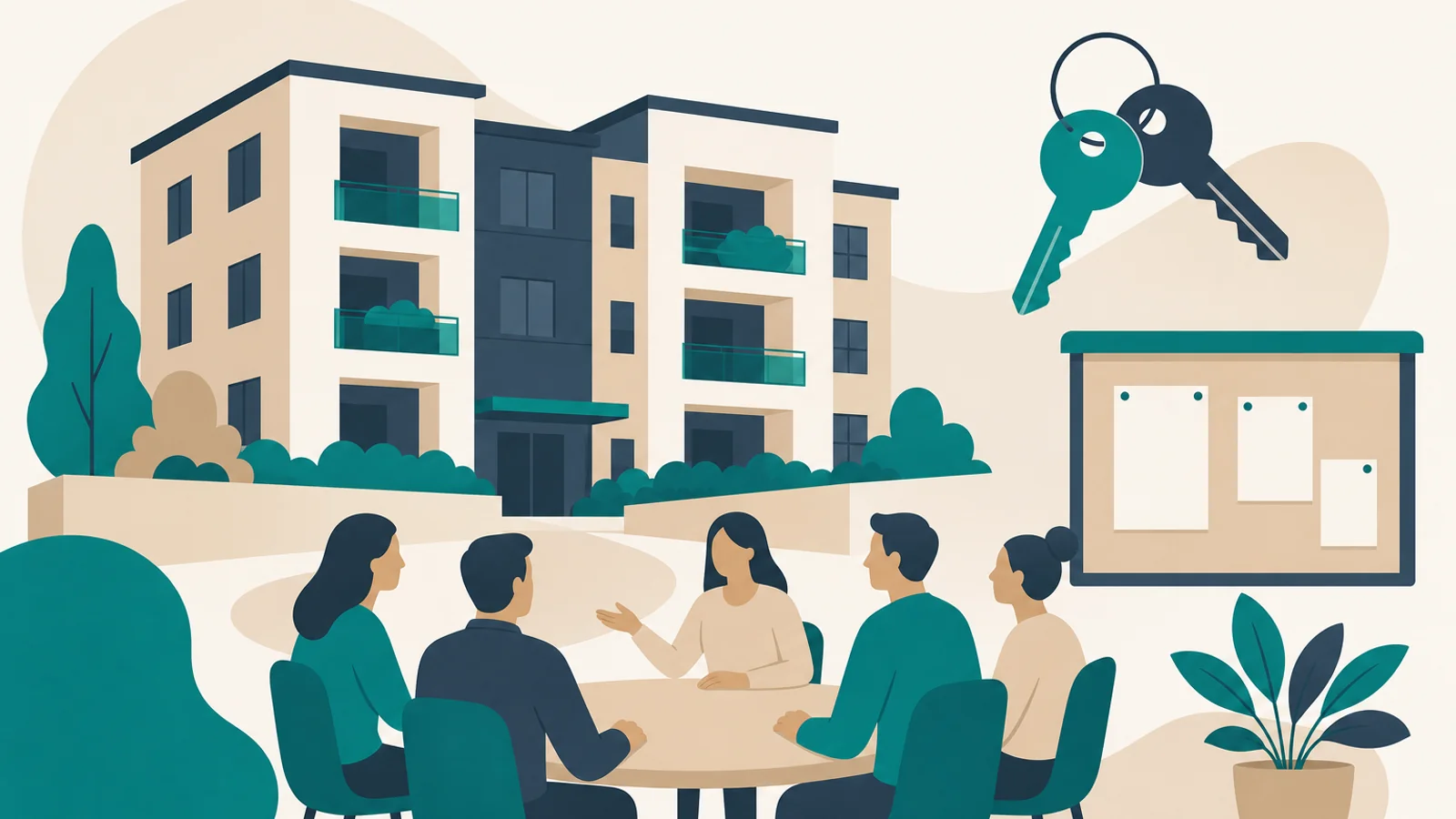
When you buy an apartment or property within a multi-unit building in Spain, you automatically become part of a comunidad de propietarios (homeowners association or HOA). This legal entity governs shared spaces, common expenses, and collective decision-making for the entire building or complex. Understanding how Spanish homeowners associations function is essential for every property owner—whether you’re a resident, landlord, or foreign investor.
The comunidad de propietarios Spain system operates under the Ley de Propiedad Horizontal (LPH), most recently updated in 2021. According to BOE (Boletín Oficial del Estado), this framework governs millions of Spanish residential buildings, establishing clear rules for community governance, financial obligations, and dispute resolution.
In this comprehensive guide, we’ll walk you through the legal framework (Ley de Propiedad Horizontal or LPH), your rights and obligations as a community member, how to navigate general meetings, what to expect from special assessments (derramas), and practical strategies for resolving disputes. By the end, you’ll have a clear roadmap for managing your HOA responsibilities and protecting your investment.
What Is a Comunidad de Propietarios?
A comunidad de propietarios is the legal association formed by all owners of individual properties (flats, commercial units, parking spaces, or storage rooms) within a single building or development. Spanish law automatically creates this association when a building has multiple separately owned units. The comunidad is governed by the Ley de Propiedad Horizontal (LPH), enacted in 1960 and updated multiple times (notably in 1999, 2013, and 2021).
Key Features
- Mandatory Membership: If you own a property in a multi-unit building, you’re a member by default—there’s no opt-out.
- Shared Ownership: Common areas (hallways, elevators, roof, façade, gardens, swimming pool) belong collectively to all owners in proportion to their ownership coefficients (cuota de participación).
- Bylaws (Estatutos): Each comunidad has written statutes outlining rules, payment schedules, and governance procedures. These must comply with the LPH but can include additional building-specific clauses.
- Administrator (Administrador): Most buildings appoint a professional administrator or property management company to handle day-to-day operations, finances, and legal compliance.
The comunidad ensures that shared expenses (maintenance, insurance, utilities for common areas) are fairly distributed, and that the building operates smoothly for all residents.
Process flow
flowchart TD
%% EN: HOA Governance Process
S0["Start: Owner in<br/>Building"]
S1["Pay monthly<br/>community fees"]
S2{"General meeting<br/>called?"}
S3["Receive agenda<br/>6 days advance"]
S4["Attend meeting<br/>(in person or proxy)"]
S5["Vote on matters<br/>(weighted by cuota)"]
S6{"Derrama<br/>approved?"}
S7["Pay special<br/>assessment"]
S8["Administrator<br/>executes decision"]
S9["Continue<br/>ownership"]

S0 --> S1
S1 --> S2
S2 -->|No - routine| S9
S2 -->|Yes - annual/extraordinary| S3
S3 --> S4
S4 --> S5
S5 --> S6
S6 -->|Yes| S7
S6 -->|No| S8
S7 --> S8
S8 --> S9
S9 --> S2
Legal Framework: Understanding the LPH
The Ley de Propiedad Horizontal (Horizontal Property Law) is the cornerstone of Spanish condominium law. Here are its main provisions:
- Universal Obligations: All owners must contribute to common expenses in proportion to their ownership coefficient (a percentage listed in the property deed that reflects the unit’s size and features relative to the whole building).
- Majority Rule: Most decisions at the general meeting require a simple majority (over 50% of the ownership coefficients present or represented). Major structural work, rule amendments, or installation of elevators/accessibility features may require qualified majorities (three-fifths or four-fifths, depending on the issue).
- Right to Use Common Areas: Owners have equal rights to use elevators, stairwells, pools, gardens, and other shared facilities, subject to the building’s bylaws and local regulations.
- Dispute Resolution: The LPH provides mechanisms for resolving conflicts (late payments, rule violations, noise complaints) through the comunidad’s internal channels or, if necessary, civil court proceedings.
Recent Reforms
The 2013 and 2021 amendments introduced:
- Stricter timelines for payment notices and debt recovery
- Enhanced accessibility requirements (mandatory installation of elevators or ramps in certain cases, with public subsidies available)
- Digital meeting options (video calls, electronic voting) for greater flexibility
- Stronger protections for tenants and vulnerable owners
Familiarize yourself with the LPH’s latest version or consult a property lawyer if you’re planning significant changes (like converting a commercial unit to residential use).
How Homeowners Associations Operate
Every comunidad follows a governance cycle centered on the junta general (general meeting). Here’s how it works:
1. The Administrator (Administrador)
The administrator can be an individual owner (often in small buildings) or a professional property management firm. Duties include:
- Collecting monthly community fees (cuotas)
- Paying suppliers (cleaning, gardening, elevator maintenance, insurance)
- Preparing annual budgets and financial statements
- Calling and organizing general meetings
- Enforcing bylaws and issuing fines for rule violations
- Representing the comunidad in legal proceedings
Administrators are elected by the general meeting and typically serve one-year terms (renewable). If no professional is hired, the role may rotate among owners, though this is less common in larger buildings.
2. The President (Presidente)
The president is an owner elected by fellow members to chair meetings and sign official documents. In practice, the president often works closely with the administrator but doesn’t handle day-to-day tasks unless the building lacks a professional administrator.
3. The General Meeting (Junta General)
The junta general is the comunidad’s decision-making body. It must meet at least once a year (typically in the first quarter) to:
- Approve the previous year’s accounts
- Review the current budget and set next year’s fees
- Elect or ratify the administrator and president
- Discuss pending maintenance projects or rule changes
- Vote on special assessments (derramas) if necessary
HOA Decision-Making Thresholds
| Decision Type | Majority Required | Example Actions |
|---|---|---|
| Simple Majority (>50%) | Over half of cuotas present | Approve accounts, hire gardener, minor repairs, set monthly fees |
| Three-Fifths (60%) | 60% of cuotas | Install security cameras, amend bylaws, add bike storage |
| Four-Fifths (80%) | 80% of cuotas | Major structural changes, add floors, install elevator in buildings without one |
| Unanimous (100%) | All owners agree | Fundamental changes to building nature (residential to commercial conversion) |
Ordinary vs. Extraordinary Meetings
- Ordinary (Ordinaria): The mandatory annual meeting covering routine business.
- Extraordinary (Extraordinaria): Called as needed to address urgent issues (major repairs, legal disputes, rule amendments). Any owner can request an extraordinary meeting if at least 25% of the ownership coefficients support the request.
Notice and Quorum
The administrator must send written notice (by registered mail or certified email) at least 6 days before the meeting, including the agenda and any attached documents (budget, quotes for repairs). On the first call, the meeting requires a quorum of owners representing over 50% of the coefficients. If quorum isn’t met, a second call (usually 30-60 minutes later) allows the meeting to proceed with whoever attends, provided the agenda was properly communicated.
4. Voting and Decision Thresholds
Each owner’s vote weight equals their ownership coefficient. Common thresholds:
- Simple Majority (>50%): Routine matters (approving accounts, hiring a gardener, minor repairs).
- Three-Fifths (60%): Installing new amenities (security cameras, bike storage), amending non-structural bylaws.
- Four-Fifths (80%): Major structural changes (adding a floor, converting common areas, installing an elevator in buildings without one).
- Unanimous: Extremely rare; required only for changes that fundamentally alter the nature of the building (e.g., converting a residential building to commercial use).
If you can’t attend in person, you can delegate your vote to another owner or proxy by written authorization.
Community Fees and Special Assessments (Derramas)
Regular Community Fees (Cuotas)
Your monthly or quarterly community fee covers predictable expenses:
- Building insurance (structure, liability, sometimes homeowner coverage upgrades)
- Cleaning and concierge services
- Elevator maintenance and inspection (mandatory annual checks)
- Gardening and pool maintenance (if applicable)
- Utilities for common areas (lighting, water for irrigation, heating in shared spaces)
- Administrator fees
The total annual budget is divided among owners proportionally to their coefficients. For example, if you own a unit with a 5% coefficient and the building’s annual budget is €100,000, your share is €5,000 (roughly €415/month).
Special Assessments (Derramas)
A derrama is a one-time charge levied to fund major repairs or improvements not covered by the regular reserve fund. Common triggers:
- Façade rehabilitation or roof replacement
- Elevator installation or modernization
- Asbestos removal or structural reinforcement
- Resolving legal disputes or paying court-ordered fines
Cost breakdown
| Cost bucket | Typical share / note |
|---|---|
| Primary price / works | Largest line item |
| Taxes & fees | Often mid-single to low-double digits % |
| Professionals | Lawyer, notary, agent, surveyor |
| Contingency | Keep a cash buffer |
Derramas require approval by the general meeting (usually simple majority for amounts up to a certain threshold; qualified majority for large sums). Once approved, all owners must pay their share within the specified deadline—often 30-60 days. Failure to pay can result in late fees, loss of voting rights, and even legal action (the comunidad can file a monitorio proceeding to recover the debt, and in extreme cases, place a lien on your property).
Typical Derrama Amounts
- Minor Repairs: €500–€2,000 per unit (painting common areas, fixing a water leak)
- Elevator Installation: €5,000–€15,000 per unit (depending on building height and subsidy eligibility)
- Façade Rehabilitation: €3,000–€10,000 per unit (scaffolding, insulation, repainting)
- Roof Replacement: €1,500–€5,000 per unit
Many regions offer public grants or low-interest loans for energy efficiency upgrades (insulation, solar panels) or accessibility improvements (elevators, ramps). The administrator should investigate these before announcing a derrama.
Your Rights as a Community Member
As an owner within a comunidad, you have several key rights:
- Attend and Vote at Meetings: You can participate in all general meetings, propose agenda items, and vote on decisions proportional to your ownership coefficient.
- Access Financial Records: You’re entitled to review the annual accounts, budget, and supporting invoices (receipts for cleaning contracts, elevator maintenance, insurance premiums). Request these from the administrator at least 5 days before the annual meeting.
- Use Common Areas: You have equal access to hallways, elevators, rooftop terraces, pools, gyms, and other shared facilities, subject to bylaws (e.g., pool hours, noise restrictions after 10 PM).
- Challenge Illegal Decisions: If you believe a vote violated the LPH or the building’s statutes, you can file a legal challenge within 3 months of the meeting. Common grounds include lack of proper notice, quorum issues, or decisions that exceed the comunidad’s authority.
- Request Extraordinary Meetings: If at least 25% of the ownership coefficients (yourself plus other owners) agree, you can compel the administrator to call an extraordinary meeting to address urgent issues.
Practical checklist
- Verify key documents with a professional
- Compare at least two solid options
- Budget taxes, fees, and a contingency
- Confirm local rules for your city/CCAA
- Plan the next step before you commit
Your Obligations as a Community Member
Ownership comes with responsibilities:
- Pay Your Fees on Time: Community fees and derramas are mandatory. Late payments accrue interest (typically 10% annually as per the LPH, or a higher rate if the bylaws specify) and can trigger debt collection proceedings.
- Maintain Your Unit: You must keep your property in good condition and avoid causing damage to common areas or other units (e.g., water leaks, noise disturbances).
- Comply with Bylaws and House Rules: Respect quiet hours, parking rules, pet policies, and restrictions on renovations (you may need comunidad approval before altering façade elements, balconies, or shared walls).
- Notify the Comunidad of Changes: If you sell your unit, rent it out, or change your contact details, inform the administrator so the comunidad’s records stay current.
- Contribute to Community Welfare: Support necessary repairs and improvements, even if they don’t directly benefit your unit (e.g., ground-floor owners still pay for elevator maintenance, as it’s a shared asset that enhances the building’s value).
Related guides and city hubs
Useful next reads on Inmodir:
City hubs:
Official and industry sources
Verify figures and rules on primary sources:
This guide is educational, not legal, tax, or mortgage advice. Confirm details with a qualified professional and current CCAA rules.
Practical next steps
Before you commit capital or sign documents, stress-test the numbers with current portal comps, ask for a recent nota simple, and keep a cash buffer for taxes and surprises. Pair this guide with a local agent search on Inmodir city hubs and, when rules are involved, confirm details with a lawyer or tax adviser for your autonomous community.
FAQ
What happens if I don’t pay my community fees on time?
Late payment triggers interest charges (typically 10% annually per LPH) and can result in loss of voting rights at meetings. If fees remain unpaid after 30 days, the comunidad can file a monitorio (fast-track debt collection) in Spanish courts, potentially leading to property liens or asset seizure.
Can the homeowners association force me to contribute to improvements I don’t want?
Yes, if the improvement is approved by the required majority at a general meeting. Once approved, all owners must pay their proportional share (cuota) of the costs, even if they voted against the measure or don’t personally benefit from it (e.g., ground-floor owners still pay for elevator maintenance).
How do I challenge an unfair comunidad decision?
You can file a legal challenge within 3 months of the meeting if you believe the decision violated the LPH or building statutes. Common grounds include lack of proper notice, quorum failures, or decisions exceeding the comunidad’s authority. Consult a property lawyer (abogado especializado en propiedad horizontal) for guidance.
What is the difference between ordinary and extraordinary general meetings?
Ordinary meetings occur annually (typically Q1) to approve accounts, set budgets, and elect administrators. Extraordinary meetings address urgent issues (major repairs, legal disputes, rule amendments) and can be called anytime by the administrator or by 25% of ownership coefficients requesting one.
Can foreign property owners vote in comunidad meetings?
Yes. All property owners have equal voting rights proportional to their ownership coefficient (cuota), regardless of nationality or residency status. You can vote in person, by written proxy, or in some modern communities, electronically if bylaws permit.
What are typical derrama (special assessment) amounts for common repairs?
Minor repairs (painting, small leaks): €500–€2,000 per unit. Elevator installation: €5,000–€15,000 per unit. Façade rehabilitation: €3,000–€10,000 per unit. Roof replacement: €1,500–€5,000 per unit. Many regions offer grants or low-interest loans for energy efficiency and accessibility improvements.
Disclaimer: This guide provides general information about Spanish homeowners associations and the Ley de Propiedad Horizontal. It should not replace advice from qualified property lawyers, licensed administrators, or official regional authorities. Community governance practices, regional regulations, and specific bylaw interpretations vary by autonomous community and individual building statutes. Always consult professional legal advice for specific comunidad disputes or major decisions.
Measuring & move-in tools
Laser measures, tape rules, levels, wall scanners, and safety gear for flat viewings and moving day in Spain.
- Curated for property search
- Trusted brands
- Fast delivery
- Buyer reviews
Affiliate links opens on Amazon.es. Prices and availability may vary.